
Teaching and Learning

Student Well Being, Teaching and Learning

Neuroaccessibility Is Not a Trend. It Is the Future

Why the future of learning depends on designing for the full range of human development During my years as a classroom teacher, serving both general education and special education students at the elementary level, parent-teacher conferences often turned into something much deeper. They became free coaching sessions for families trying to understand their children, support their learning, and make sense of behaviors that schools often reduced to labels. I typically gave parents my phone number and shared after-school hours when they could reach me. At the time, that kind of accessibility felt like part of the work. Families did not only want a report on grades or behavior. They wanted guidance, partnership, and someone who could help them think through what was happening with their child. As I learned practical parenting strategies, long before anyone was calling them parenting hacks, I shared them with the families I served. I also began to integrate my interest in natural health into my teaching practice. This was before the internet became the first place every parent turned for answers. Parents asked teachers for advice, and they often trusted the educators who knew their children well enough to offer grounded observations. When I worked with students showing attention difficulties, impulsivity, or intense preoccupation with video games, I often encouraged families to begin with the basics. I asked what their children were consuming, how much water they were drinking, how much sleep they were getting, and what their evenings looked like at home. I encouraged families to reduce overstimulation where possible, limit excessive television and screen time, and create more structure in the evening. I shared resources, including information about dye-free and additive-conscious approaches such as the Feingold Diet, because some research suggests that artificial food colors may worsen behavior in a subset of children, even though they are not considered a primary cause of ADHD. I also encouraged whole foods and hydration as a starting point, because I believed then, and still believe now, that the body and brain do not function separately. As I used to say to my students, and as many of them would joyfully repeat, “A hydrated brain is a learning brain.” That line has stayed with me because it captured something simple and true. Children learn better when the foundational conditions for learning are being supported. Hydration, nutrition, rest, movement, and regulation may not solve every challenge, but they matter more than many systems are willing to admit. There were also parents who asked me one of the hardest questions an educator can be asked: should they medicate their child or not? That was never a decision I made for families, and it was never advice I believed I should give. Decisions about ADHD treatment belong with parents, the child when appropriate, and licensed medical professionals. What I did offer was perspective, resources, and a reminder that families had options to explore as they pursued an informed decision. I encouraged them to observe carefully, talk to their children about how they felt, try supportive lifestyle changes where appropriate, and speak with their pediatrician from a place of knowledge rather than fear. That was my lane. Not diagnosis. Not prescribing. Not anti-medication rhetoric. Support for thoughtful, informed, individualized decision-making. Over the years, I have also had conversations with adults my age who carried anger about how these decisions were handled in their own childhoods. Some shared that they had been medicated without a full explanation, or that they were told they were taking vitamins rather than being honestly included in the conversation about their own bodies and minds. Some eventually stopped medication on their own once they understood what had been happening, and some later turned to other forms of self-medication in ways that were not healthy. I share those experiences not to generalize, but to make one point clear: every case is personal, and the long-term emotional experience of a child matters too. That is why this conversation must be bigger than diagnosis and bigger than compliance. Throughout my career, I have continued to learn that neurodivergence is not a childhood issue alone. Neurodivergent children grow up to become adults, employees, founders, leaders, spouses, and parents. Yet too many of the spaces we design, from classrooms to workplaces to community systems, still assume one narrow way of functioning, processing, focusing, regulating, and communicating. Putting Education First exists to help change that. We specialize in making mind-body integration, sensory-supportive learning environments, and neurosensitive lifestyle supports understandable and actionable for educators, school founders, and families. We offer customized learning series and health coaching to support individuals and groups seeking more responsive and sustainable ways to learn, lead, and live. The mission of our work is to advance the intersection of education and health. Too often those fields are treated as separate, when in reality they are deeply intertwined. A child’s ability to focus, regulate, participate, and learn is shaped by far more than curriculum. It is shaped by nervous system state, environment, sleep, nutrition, sensory load, emotional safety, and whether the adults around them understand how to respond with skill rather than shame. Research continues to show that screen exposure can affect children’s sleep, attention, and behavior, even if the size of those effects varies and the picture is complex. It is time to design spaces and systems that are more supportive, more inclusive, and more honest about what human beings actually need in order to thrive. Neuroaccessibility is not a niche issue. It is not a trend. It is a necessary design principle for the future we are already living in. If we are serious about serving today’s society, then we must stop treating neurodivergent needs as exceptions and start building environments that reflect the full range of how people think, feel, process, and learn. That is not just good education. That is good design. That is good leadership. And that is part of what it truly means to put education first.
Teaching and Learning

Ancient Practices, Future Clues

Oral Tradition, Storytelling, and the Future of Education When people talk about the future of education, the conversation almost always begins with technology. Artificial intelligence, adaptive learning platforms, virtual classrooms, and data-driven instruction tend to dominate the discussion. These innovations are often presented as the solutions that will shape the next era of learning. Yet the more I study human development and cultural history, the more I arrive at an unexpected conclusion. The future of education may depend, in part, on remembering some of our oldest practices. This is not because the past was simpler or because earlier societies lacked innovation. Rather, many civilizations understood something we are only beginning to rediscover: technological progress can evolve alongside a deep commitment to human connection and shared meaning. Storytelling Was Humanity’s First School Long before textbooks, screens, or even written language existed, human beings learned through stories. These stories were not merely forms of entertainment. They carried practical knowledge, moral guidance, environmental awareness, social expectations, and cultural identity. Through storytelling, communities passed down the wisdom necessary for survival and cooperation. Knowledge lived within people, and voice, gesture, rhythm, and song became the earliest educational tools. Organizations such as the National Museum of the American Indian describe oral traditions as living cultural reservoirs that transmit social teachings, environmental knowledge, and collective identity across generations. In many societies, storytelling functioned as the primary curriculum through which children learned what it meant to live responsibly within their communities. Every Civilization Built Systems to Teach the Next Generation Across the world, civilizations developed their own systems to preserve knowledge and guide future generations. In Chinese tradition, the Analects preserved teachings on ethics, leadership, governance, and personal conduct. These writings shaped not only intellectual thought but also social responsibility and civic life. In parts of South America, codices and quipu served as systems for recording historical memory, social organization, and administrative practices. Throughout many African cultures, proverbs and griot narratives preserved genealogy, community history, and moral instruction. The griot was not simply a storyteller but also a historian, philosopher, and guardian of cultural memory. Although the methods differed across cultures, the intention remained remarkably consistent. Societies created ways to preserve their humanity while preparing the next generation to carry that responsibility forward. These systems ensured that knowledge was not merely transferred as information. It was contextualized, practiced, and lived within the culture. Stories carried memory. Memory shaped identity. Identity guided responsibility. And responsibility sustained civilization. Ancient Societies Had Technology Too It is a common misconception that ancient societies were technologically primitive. In reality, many civilizations developed sophisticated technologies suited to their environments and needs. They designed advanced navigation systems, complex agricultural practices, monumental architecture, astronomical mapping techniques, and structured governance models. Technology was always evolving. However, these advancements developed alongside a deliberate effort to cultivate character, responsibility, and community awareness. Education did not separate knowledge from personal development. Learning was relational, experiential, and multisensory. Children learned by observing adults, participating in community activities, and listening to stories that explained their place within the larger social and natural world. Knowledge was inseparable from responsibility. What Happens When Societies Ignore History When societies fail to learn from history, they often repeat earlier mistakes in new forms. Today we face a paradox that is difficult to ignore. We possess more information than any civilization in history has ever had access to. Yet at the same time, many communities report increasing levels of loneliness, social fragmentation, distrust, declining empathy, and cultural disconnection. Modern systems have become highly effective at supporting individual advancement. However, far fewer structures exist to nurture a shared sense of community and belonging. In Western society particularly, rapid technological development has reshaped human interaction faster than our social structures have adapted. Many relationships now occur through digital platforms rather than through shared physical experiences and traditions. Communities are frequently formed artificially rather than emerging organically through shared practices, values, and responsibilities. As a result, people may appear more connected than ever before while still experiencing profound isolation. Information Without Meaning Modern education has become extremely efficient at distributing information. However, information alone does not create social cohesion or a sense of belonging. Storytelling traditions accomplished something different. They connected knowledge to narrative, narrative to community, and community to shared responsibility. Through stories, individuals learned where they fit within the larger social structure. Storytelling helped cultivate empathy, moral reasoning, historical awareness, environmental stewardship, and relational intelligence. These outcomes were not accidental byproducts of storytelling traditions. They were central to the purpose of those traditions. The Futurist Paradox As artificial intelligence and digital technologies accelerate access to information, the importance of human meaning-making becomes even more apparent. Machines are increasingly capable of generating data, summarizing research, and simulating conversation. However, technology cannot transmit intergenerational identity, replace cultural memory, or create genuine communal belonging. These elements still require human relationships and shared experiences. This reality leads to an unexpected prediction about the future. Societies that thrive in the coming decades will likely be those that successfully reintegrate narrative, oral tradition, and communal learning into modern institutions. This shift will not be about nostalgia or romanticizing the past. Instead, it will reflect a recognition that technological progress must be balanced with systems that cultivate human connection. The Future of Education May Look Surprisingly Ancient Future learning environments will likely continue to incorporate advanced technologies. At the same time, they may begin to rebalance the role of human interaction within the learning process. Technology can deliver information efficiently, but communities must provide meaning. It is possible to imagine schools that incorporate storytelling circles, intergenerational dialogue, local cultural narratives, community wisdom archives, and collaborative problem-solving grounded in shared history. Within such environments, students would not simply memorize information. They would develop a clearer understanding of who they are, where they belong, and why their choices matter. Research increasingly shows that a strong sense of belonging is one of the most important foundations for civic responsibility, empathy, and long-term social stability. Ancient educational systems

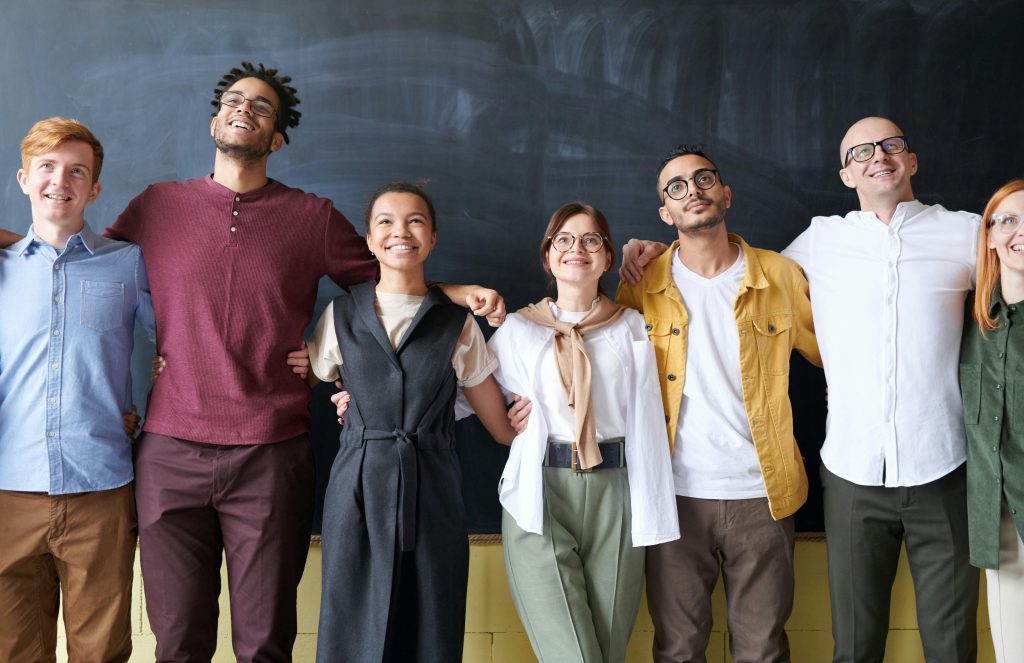
A diverse group of colleagues joyfully embracing in an office setting, showcasing team spirit.
Equity & Inclusion, Student Well Being, Teaching and Learning

5 Ways to Build More Inclusive and Equitable Classrooms

5 Ways to Build More Inclusive and Equitable Classrooms Creating an inclusive and equitable classroom is essential for student success. When learners feel safe, respected and understood, they are more likely to participate actively, take risks, collaborate with their peers and grow academically. Inclusion is not simply a teaching strategy. It is a philosophy that transforms the entire school community. “Inclusion is not about placing students in a classroom. It is about ensuring every student feels they belong there.” Why Inclusion Matters More Than Ever Today’s classrooms reflect a wide range of cultural backgrounds, learning styles, abilities and emotional needs. Inclusive practices make learning accessible for everyone while strengthening the overall classroom culture. An inclusive environment promotes collaboration, empathy, creativity and self confidence, all of which are essential skills for life. 5 Ways to Create Inclusive and Equitable Classrooms 1. Represent Every Student in the Classroom Environment A simple but powerful starting point is making sure students can see themselves reflected in the classroom. This includes diverse books, visual materials, languages, posters and examples used in lessons. When students recognize their identity in the space, they feel valued and welcomed. “Students learn best in spaces where they can see who they are and who they can become.” 2. Use Multiple Ways to Teach and Assess Learning Not every student learns the same way. Inclusive classrooms use a variety of teaching methods such as visuals, discussions, hands on activities, movement and digital resources. Offering multiple ways to demonstrate understanding helps remove barriers and ensures that all students can succeed. 3. Encourage Collaboration and Peer Support Students learn a lot from each other. Group work, peer tutoring and shared problem solving build confidence, strengthen social skills and promote empathy. When collaboration becomes part of everyday learning, students feel connected and supported. “Inclusion grows naturally when students lift each other up.” 4. Learn About Students’ Cultural and Personal Backgrounds Taking the time to understand students’ cultures, languages, interests and experiences helps build trust and emotional safety. This knowledge supports culturally responsive teaching and strengthens the relationship between educators, students and families. 5. Make Classroom Routines Clear, Predictable and Supportive Predictability reduces stress and increases confidence. Inclusive classrooms have clear expectations, visual schedules, consistent routines and supportive transitions. When students know what to expect, they feel more secure and more able to engage in learning. “Consistency creates safety, and safety creates room for learning.” Conclusion Inclusive and equitable classrooms do not happen by accident. They are built intentionally through daily practices that value diversity, support student needs and create a climate of belonging. When classrooms embrace inclusion, everyone benefits. Students become more confident, more engaged and more prepared for the world around them. These five strategies are powerful starting points, but implementing them consistently requires expertise, planning and long term commitment. Let a Professional Support Your School If your school community wants to strengthen inclusion and equity, you do not have to do it alone. A professional can help you design effective frameworks, train educators, create inclusive practices and build long term solutions tailored to your unique needs. Contact us to explore how we can help you create an inclusive and equitable learning environment. Contact us

Scroll to Top